Should you promote your eBay listings?
I’ve used Promoted Listings for a long time, usually at a very low percentage. Until I looked at my actual numbers for this article, I didn’t realize how much of my sales eBay was attributing to them.
From January 1 through August 23, 2026, 74% of my sales were classified by eBay as promoted sales, compared with only 26% organic sales.
That surprised me.
What’s even more interesting is that I’m not using the high advertising rates eBay often suggests. I generally promote my listings somewhere around 1% to 3%, often around 2%.
So yes, Promoted Listings appear to be doing something for me.
But I also don’t think they’re magic, and I definitely don’t think you need to blindly accept whatever advertising rate eBay suggests.
Here’s how I actually use them.
What Are eBay Promoted Listings?
Promoted Listings are eBay’s advertising system for sellers.
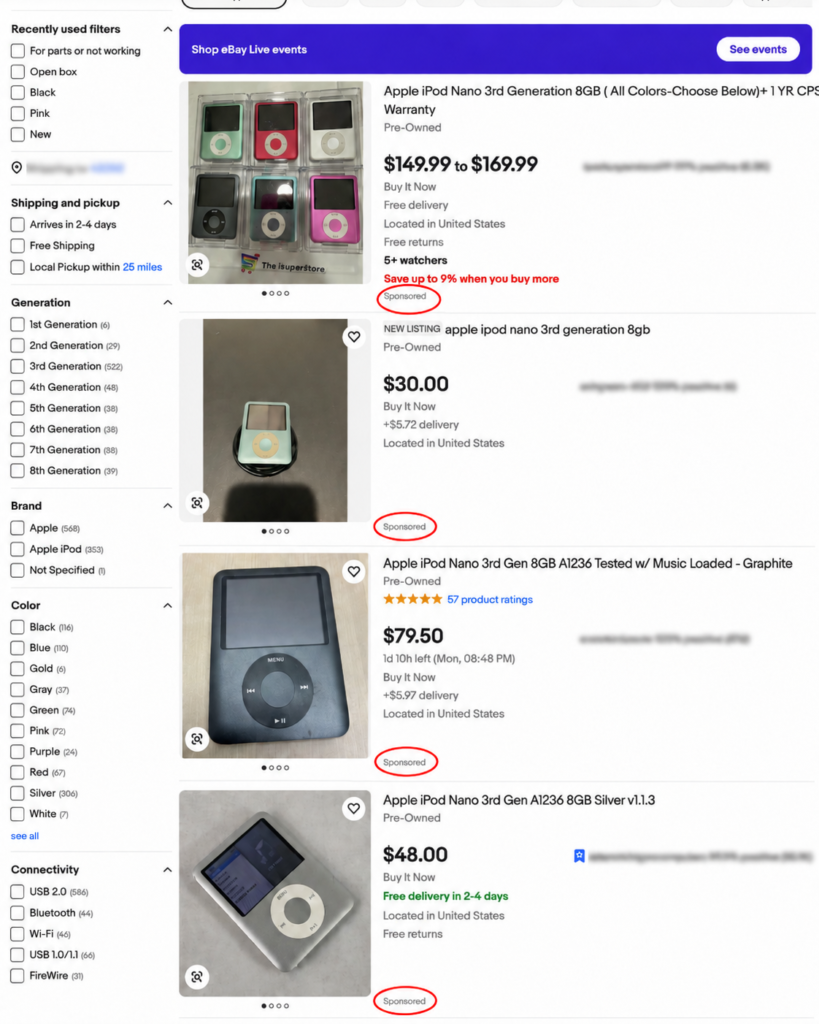
Instead of relying completely on normal exposure, you pay eBay an additional advertising fee for the opportunity to have your listing appear in sponsored placements.
I use the General campaign strategy with a fixed ad rate.
I don’t use Priority campaigns, and I don’t use a dynamic rate that automatically changes based on eBay’s suggested percentage.
With the General strategy, eBay charges an advertising fee when a promoted item sells under its attribution rules. The fee is based on the ad rate you chose and the total sale amount.
For me, the important part is that I can choose my own fixed percentage and keep it low.
My Actual Promoted Listings Results
This is the part that surprised me.
Year-to-date through August 23, 2026:
Promoted sales: 74%
Organic sales: 26%
I wasn’t expecting Promoted Listings to account for anywhere near that much of my sales.
I promote basically every eligible listing, but at a low rate.
Usually I’m somewhere between about 1% and 3%.
Around 2% is pretty normal for me.
And yet almost three-quarters of my sales this year have been attributed by eBay to promoted listings.
That’s enough for me to believe the feature is worth using in my store.
At the same time, there’s an important distinction here.
I can’t say that without promotion I would have lost 74% of those sales.
Maybe a buyer clicked a promoted version of my listing but would have eventually found the item anyway.
Maybe the photo caught their attention.
Maybe my price was better.
Maybe my title matched exactly what they were looking for.
There’s a lot of nuance to it.
All I can say for certain is that eBay attributed 74% of my sales to promoted listings, even though I’m generally using a pretty low advertising rate.
I Promote Almost Everything — But at a Low Rate
My strategy is pretty simple.
Rather than carefully deciding whether every individual item deserves promotion, I generally promote all of my eligible listings at a low fixed percentage.
I don’t spend much time managing it.
That’s similar to the rest of My Simple eBay Listing Workflow (From Item to Listing) — I want a repeatable process that doesn’t make every listing unnecessarily complicated.
Could I get better results by studying every item and setting different rates?
Maybe.
Could I make more money by testing 5%, 8%, 10%, or higher?
Maybe.
I’ve never seriously tested that.
What I do know is that the low-rate strategy I’m already using has resulted in a very large percentage of my sales being attributed to promoted listings.
For now, I’m comfortable with that.
I Don’t Use eBay’s Suggested Rate
eBay regularly suggests advertising rates much higher than what I use.
I’ve seen suggested rates around 7%, 8%, 10%, 12%, and sometimes even 14%.
Personally, those numbers seem extremely high to me.
I’ve never followed them.
That doesn’t mean they don’t work.
Maybe I’d sell considerably more inventory if I used a 12% advertising rate. I genuinely don’t know because I haven’t tested it.
But I’m also giving up another 12% of the sale in advertising costs.
That’s a lot.
I’d rather start low.
If you’re curious about Promoted Listings, I think there’s nothing wrong with experimenting with something like 1%, 2%, or 3% and seeing what happens.
You can always change your strategy later.
Even a Small Percentage Adds Up
Advertising isn’t free, but a small percentage isn’t necessarily a huge expense on an individual sale either.
If the total amount used to calculate the ad fee were $30, for example, a 5% advertising rate would be $1.50.
Would you give up $1.50 if it helped you make the sale faster?
Maybe.
That’s the calculation.
The problem comes when you start stacking a large advertising percentage on top of everything else you’re already paying.
You have your cost in the item, normal eBay fees, shipping expenses, supplies, and potentially an additional advertising fee.
That’s why I prefer starting small.
I don’t mind giving eBay a little extra money if they’re helping put my item in front of more buyers.
I just don’t want to give away more margin than I need to.
Promotion Makes More Sense When There’s Competition
I think Promoted Listings make the most sense when a lot of sellers have the same or very similar item.
Imagine you’re selling something like an iPhone 13.
There may be a huge number of other iPhone 13 listings competing for the same buyers.
In that situation, extra advertising exposure can make more sense because your listing could otherwise be buried among a lot of similar choices.
The same logic can apply to other common electronics, clothing, accessories, replacement parts, or anything else where buyers have pages of similar listings to choose from.
That’s where getting additional visibility can potentially help.
Rare Items Are Different
Now imagine you’re selling some strange 100-year-old antique and there are only two of them listed on eBay.
Do you really need to advertise it?
Maybe not.
If somebody searches for the specific keywords that describe that item, they’re probably going to find your listing anyway because there isn’t much competition.
The bigger problem may simply be waiting for the right buyer.
That’s a very different situation from selling a common phone.
I’ve talked about that difference in How Long Does It Take to Sell Something on eBay? My Experience. Some inventory has constant demand, while rare items may need one very specific buyer.
That doesn’t mean you can’t promote a rare item.
I just think the potential value of promotion is much clearer when you’re competing against a lot of similar listings.
Promoted Listings Can’t Fix a Bad Listing
This is probably more important than the promotion percentage itself.
You can pay to put a listing in front of more people, but if the listing looks terrible, why would they click it?
For me, the main photo is much more important.
I want the first photo to be bright, clean, sharp, and easy to understand.
If your item is sitting in a dark room and the main photo looks like a scene from a horror movie, paying eBay more money isn’t going to magically make buyers want it.
That’s why I’d work on the fundamentals first.
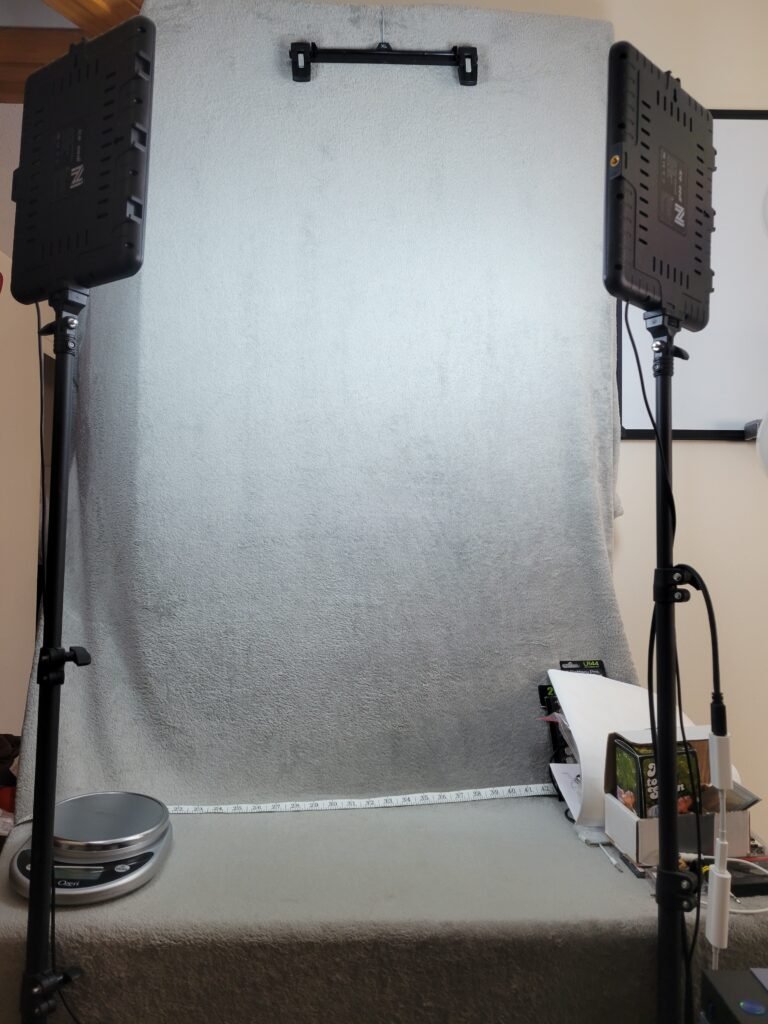
My My Simple Photo Setup for eBay (What I Actually Use) article shows exactly how I approach my listing photos.
Good title.
Good main photo.
Accurate description.
Competitive price.
An item people actually want.
Then promotion can give that good listing some additional exposure.
Pricing Still Matters More Than Promotion
Promoting something also doesn’t fix bad pricing.
If comparable items are selling for $50 and you’re asking $100 for essentially the same thing, a higher advertising rate may just show an overpriced listing to more people.
Before spending more on advertising, I’d make sure the basic price makes sense.
My own approach is usually to start toward the higher end, leave room for offers, and adjust depending on what the listing is doing.
I explain that process more in How I Price Almost Everything on eBay (Without Overthinking It) and When Should You Lower Your eBay Price?
Promotion is another tool.
It isn’t a substitute for understanding the market.
Promoted Sales Don’t Necessarily Mean Promotion Caused the Sale
This is something worth remembering when looking at your Advertising dashboard.
My dashboard says 74% of my sales this year were promoted.
That’s a very strong number.
But I don’t interpret that as:
“Promoted Listings created 74% of my business.”
There’s no way for me to know that.
A buyer may have seen my promoted listing and clicked because the ad gave it additional exposure.
Or maybe they would have found the same item organically five minutes later.
The photo, title, price, condition, seller feedback, shipping cost, and demand all still play a role.
What the data does tell me is that promoted listings are involved in a large percentage of my sales.
For a system where I’m normally only giving up somewhere around 1% to 3%, I’m comfortable continuing to use it.
Should You Use a Higher Promoted Listings Rate?
You can experiment.
I can’t tell you that 2% is the magic number because I haven’t tested every percentage.
Someone selling hundreds of identical brand-new products might have a completely different strategy from me.
I sell mostly one-off used items.
A seller with huge margins might happily spend 10% on advertising if it dramatically increases sales volume.
Another seller working with thin margins might decide that even 5% is too much.
That’s why I wouldn’t blindly copy my rate or eBay’s suggested rate.
Look at your own inventory.
Look at your margins.
Try something.
Then look at the results.
What I Would Do If You’re New to Promoted Listings
If you’ve never promoted an eBay listing before, I wouldn’t overthink it.
You don’t necessarily need to start at the 10%, 12%, or 14% rate you may see suggested.
You can start low.
See what happens.
Look at your Advertising dashboard after you’ve accumulated some sales and compare promoted sales with organic sales.
You can always experiment later.
Maybe try a slightly higher percentage on a few competitive items.
Maybe leave unusual items lower.
Maybe test different rates and see whether the additional advertising expense actually results in enough additional sales to make it worthwhile.
There are a lot of strategies you could use.
My strategy happens to be simple:
General campaign. Fixed rate. Low percentage. Almost every listing.
And so far, I’m comfortable with the results.
Final Thoughts
So should you promote your eBay listings?
For me, yes.
As of August 23, 2026, eBay attributes 74% of my year-to-date sales to promoted listings.
And I’m achieving that while generally using a relatively low advertising percentage — usually somewhere around 1% to 3%.
That’s enough for me to keep doing it.
I don’t follow eBay’s much higher suggested rates.
I don’t use Priority campaigns.
I don’t use dynamic rates.
And I don’t think promotion matters more than buying good inventory, pricing it properly, taking excellent photos, and creating an accurate listing.
Promoted Listings are one small part of the process.
But based on my actual numbers, they’re a part I wouldn’t completely ignore.
If you’re curious, try a low rate and watch your own results.
You can always adjust from there.
New to Reselling?
If you’re just getting started, these guides cover the basic eBay process I use: