One of the questions people have when they start selling on eBay is: How long does it actually take for an item to sell?
The answer can be anywhere from a few minutes to several months — or even longer.
I’ve had items sell within five or ten minutes of listing them. I’ve also had items sit for months before the right person finally came along.
Neither situation is necessarily unusual.
The amount of time something takes to sell depends on what you’re selling, how much demand there is, how you priced it, how much competition you’re dealing with, and what kind of buyer you’re waiting for.
After selling thousands of items, I’ve also learned that I don’t treat every item the same way. I’m much more aggressive with something I know should sell quickly than I am with a rare or unusual item that may require a very specific buyer.
Here’s how I look at it.
Some eBay Items Can Sell Within Minutes
I’ve definitely had items sell the same day I listed them.
I’ve even had some sell within five or ten minutes.
Sometimes that’s because demand is extremely strong.
Other times, especially when I was less experienced, it was probably because I priced something a little too aggressively.
If an item sells almost immediately, there’s always a chance you priced it lower than you needed to. That’s part of learning.
Over time, I’ve gotten better at pricing, so I don’t have as many situations where something sells instantly because I accidentally gave it away too cheaply.
But I still have items sell within a day fairly regularly.
If the demand is there and the price makes sense, things can move very quickly.
I Usually Start Higher and Then Adjust Quickly
I like quick sales, but I’m not trying to price every item as low as possible just to make it disappear.
Usually I’ll start toward the higher end of what I think the market supports.
I take good photos, try to describe things accurately, test what I can, and give the buyer enough information to know what they’re getting. Because of that, I’m comfortable starting a little higher.
Then I adjust.
I’m also pretty aggressive about it.
I might send out an offer for 10%, 15%, or sometimes even 20% off. If it’s a hot item and it hasn’t sold after a couple of days, I might end the listing, relist it, and knock another $5 or $10 off the price.
I go into that part of my strategy in more detail in When Should You Lower Your eBay Price?
I’d rather keep inventory moving than get emotionally attached to the original price I chose.
Demand and Sell-Through Rate Matter a Lot
Before I buy something, one of the main things I want to know is:
Are people actually buying this?
That’s why sold listings and sell-through rate matter so much to me.
I want to know whether there are recent sold listings, how frequently they’re selling, what buyers are actually paying, and how many competing listings are currently available.
If there are hundreds of active listings and very few recent sales, that’s usually telling you something.
If things are constantly selling and there aren’t that many available, that’s much more attractive.
Condition, model, color, accessories and price can all change the equation, but sell-through gives me a quick idea of whether I’m dealing with something that should move or something that may require patience.
I wrote more about that research process in How I Know an eBay Item Will Sell Before I Buy It
Rare Items Get More Patience
Rare and unusual items are different.
Sometimes you have something that’s genuinely cool but only appeals to a very specific person.
Maybe it’s vintage. Maybe it’s an unusual color. Maybe it’s collectible or signed. Maybe it’s a strange model that doesn’t come up for sale very often.
I’m much more patient with those items.
Not everybody shops on eBay every day either.
Someone might randomly decide one night that they want a vintage pink flip phone. They search for one, find yours, love it, and buy it outright.
You couldn’t necessarily have made that sale two days earlier because that buyer wasn’t looking two days earlier.
That’s why I don’t automatically assume something is a bad listing just because it doesn’t sell immediately.
Sometimes the buyer simply hasn’t arrived yet.
I’ve Had Plenty of Items Sell Months Later
Slower sales are completely normal.
When I sold more clothing, items could sit for months. I’ve even had clothing sell close to a year later.
I’ve had cameras and plenty of other inventory take a couple of months to sell too.
That doesn’t necessarily make those items bad inventory.
But today I try to buy more things that I already know have regular demand.
For me, that’s often electronics.
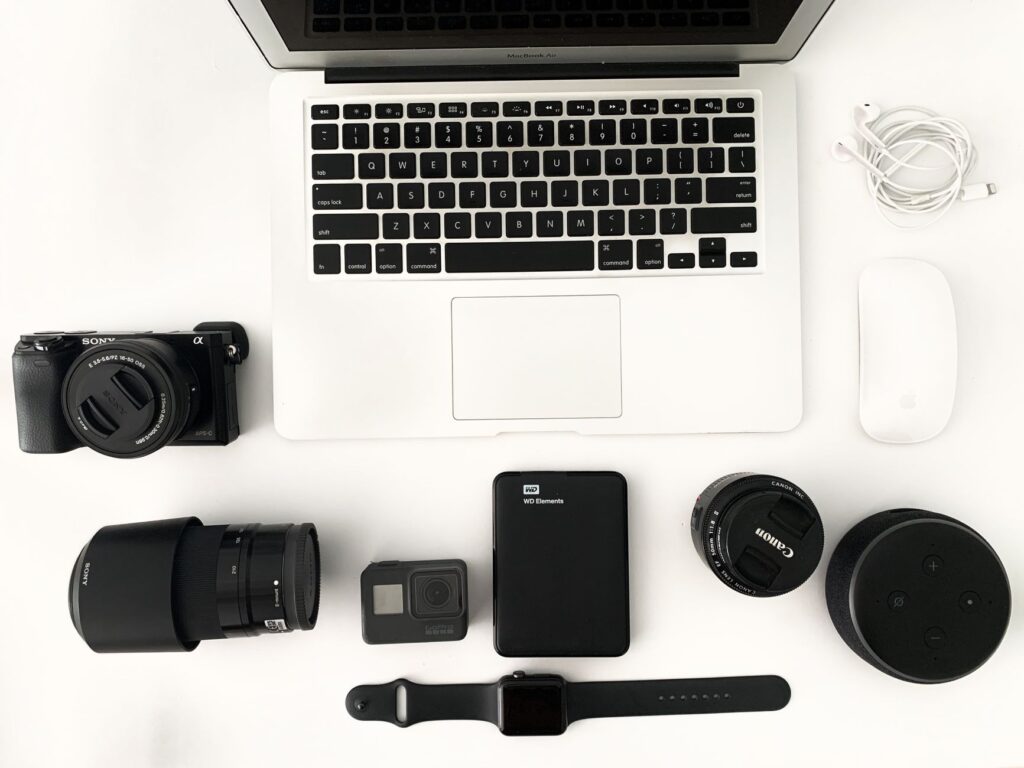
Phones, iPods, cameras and similar items tend to have buyers consistently looking for them.
That’s one of the reasons my business gradually moved more toward electronics and away from clothing.
Why I Prefer Electronics
Electronics generally move faster for me than a lot of the other things I’ve sold.
They’re also often small and relatively valuable.
I like small and expensive.
A small electronic device can sometimes be worth far more than a much larger item while being easier to store, photograph, pack, and ship.
Clothing worked for me too, especially when I was starting out. But there might be a tiny mark you didn’t notice, a tear, a sizing issue, or some other condition problem.
With electronics, testing becomes more important, but you can often fit much more value into a much smaller amount of space.
I have a separate guide on exactly how I approach that in How to Test Electronics for eBay (Simple Beginner Guide)
Your Store Size Changes the Answer
How long an individual item takes to sell also matters differently depending on how much inventory you have.
Someone with 20 active listings isn’t going to have the same sales volume as somebody with hundreds or thousands of listings.
If you have thousands of good items listed, you can make sales every day while still having individual items that sit for weeks, months, or even a year.
You’re not expecting every listing to sell immediately.
You’re expecting enough of your inventory to sell consistently that the business as a whole keeps moving.
How much you’re listing matters too.
In my experience, you tend to get out what you put in. If you’re consistently finding things people actually want, listing them, pricing them competitively, and building a larger store, the sales can become much more consistent.
What Views and Watchers Tell Me
I pay attention to views, especially on items that I expect to be popular.
If I list something and it gets 50 views quickly, that’s telling me people are interested.
Maybe the item is attractive but the price is a little high. Maybe buyers are comparing it with other listings. Maybe they’re waiting.
On the other hand, sometimes something only gets a few views and one of those people buys it.
You don’t need hundreds of views.
You need the right buyer.
Watchers are useful too. I usually like waiting until an item has at least a couple of watchers before I start sending offers.
If several interested buyers are watching the item, I like being able to send an offer while there’s already some interest around the listing.
Watchers aren’t a guarantee of a sale, but they’re another clue that people are paying attention.
Sometimes I End and Relist
I end and relist items fairly often.
With popular inventory, I sometimes do it on Friday, Saturday, or Sunday, when I’ve personally had good results making sales.
I’ll also occasionally have an item that I know should be popular, but for some reason it barely gets any views.
If a hot item has been sitting for a day or two and the activity makes no sense compared with what I normally see, I may end it and list it again.
Sometimes I reduce the price when I do that too.
Another way I give listings additional exposure is through eBay Promoted Listings. I broke down my actual strategy and results in Should You Promote eBay Listings? My Experience.
I’m not afraid to experiment with a listing if the results don’t match what I expected.
Shipping, Photos and the Listing Still Matter
Demand and price aren’t the only things a buyer sees.
Shipping can affect the total cost of the purchase.
My strategy is generally to charge what shipping actually costs, or pretty close to whatever eBay calculates. Other sellers use free shipping or charge less for shipping and build more of the expense into the item price.
I prefer keeping the item price and shipping cost separate.
The listing itself also needs to give the buyer confidence.
I use clear photos and try to accurately show the condition. If something has damage, I want the buyer to see it. If I’ve tested something, I explain what I tested. If something is missing, I mention it.
A strong listing can’t create demand where there isn’t any, but I still want buyers to know exactly what they’re getting.
When I Stop Waiting
I wouldn’t say I ever really worry about an individual listing.
I adjust it.
If something doesn’t sell, I’ll lower the price. Maybe I’ll send offers. Maybe I’ll end it and relist it. Maybe I’ll simply wait.
Eventually, there can reach a point where an item isn’t worth selling by itself anymore.
If an old phone gets down below roughly $10 and still isn’t worth the trouble individually, I may pull it and combine it with other phones into a lot.
That’s another way of moving slow inventory.
I wrote an entire post about that decision in Should You Sell Items Individually or as a Lot on eBay? (How I Decide)
The goal isn’t to force every single item to work forever.
Sometimes the better move is changing how you sell it.
So How Long Should You Wait?
There isn’t one answer.
For a hot item, I may start making changes within days.
For something rare, I may be willing to wait months.
For cheap inventory that isn’t worth listing individually anymore, I may eventually bundle it into a lot.
For clothing, waiting several months wasn’t unusual when I sold more of it.
The important thing is knowing what kind of inventory you’re dealing with.
Final Thoughts
So how long does it take to sell something on eBay?
I’ve had items sell within five or ten minutes.
I’ve had plenty sell the same day.
I’ve had other items take weeks.
I’ve had items take months.
And I’ve had clothing sell after sitting for close to a year.
All of those can happen.
What matters more than the number of days is understanding why the item hasn’t sold.
Is there strong demand? Is your price competitive? Are similar items actually selling? Is the listing getting views? Is the item common or unusually rare? Would lowering the price help?
Or are you simply waiting for a very specific buyer?
If you understand the market for what you’re selling, you can usually tell the difference between inventory that needs a change and inventory that simply needs more time.
And that’s a much more useful question than asking how many days an eBay listing is supposed to take to sell.
New to Reselling?
If you’re just getting started, these are some of the guides that cover the basic eBay process I use every day: