When most people first start reselling, they assume that anything profitable is worth buying.
I thought the same thing.
If I could buy something for $5 and sell it for $30, that seemed like a good deal.
And sometimes it is.
But over time I learned that profit is only one part of the equation.
These days I leave most items behind when I’m sourcing.
Not because they can’t make money.
Because many of them aren’t worth my time, effort, space, or risk.
Sell-Through Rate Is Everything
One of the first things I check is whether people are actually buying the item.
Not listing it.
Buying it.
It’s easy to find something listed for a high price.
What’s harder is finding something that actually sells consistently.
That’s why sold listings are so important.
I would much rather follow what has already been proven than try to create demand where none exists.
The market usually tells you what people want.
Listen to it.
For example, if I look up a specific phone and see only a handful listed, but over 100 sold in the last month, that’s a very good sign.
That tells me demand is strong.
In some situations, I can even price the item a little more aggressively because I know buyers are actively looking for it.
Sell-through rate isn’t perfect, but it’s one of the closest things we have to predicting how quickly something might sell.
I Assume The Worst
This is one of the biggest changes I’ve made over the years.
If I’m buying electronics and I’m not completely sure whether something works, I often assume the worst-case scenario.
Let’s say I find an old electronic device.
Instead of assuming it works, I assume it’s completely broken.
Then I ask myself:
If this thing is totally dead, can I still make money?
If the answer is yes, then I become much more interested.
Sometimes half the battle is protecting yourself from bad surprises before they happen.
If the worst-case scenario still works financially, everything above that is a bonus.
When I First Started, I Bought Almost Anything
One thing nobody tells you about sourcing is that in the beginning you often don’t know what sells.
I certainly didn’t.
I remember feeling awkward pulling out my phone in thrift stores and garage sales.
I’d think:
Everyone is watching me.
In reality, nobody cared.
Everyone was focused on their own shopping.
Once I got over that, I started researching everything.
And I learned some expensive lessons.
The Projector Screen That Taught Me A Lesson
One of the biggest mistakes I made early on was buying large items simply because they looked valuable.
I bought a huge vintage projector screen once.
It was very cool.
It smelled old.
It looked collectible.
I thought I had found something amazing.
The problem?
The thing was massive.
It weighed around 10 pounds and was roughly five feet long.
Even if I sold it, shipping would have been incredibly expensive.
The item might have sold for $50.
Shipping might have been another $50.
Most buyers don’t get excited about paying $50 shipping on a $50 item.
That experience taught me a valuable lesson.
Just because something is interesting doesn’t mean it’s a good buy.
Big Items Create Big Problems
I bought plenty of larger items when I first started.
Things like:
- printers
- fax machines
- phone systems
- bulky electronics
Some of them sold.
Some were profitable.
But they all had the same problems.
They required:
- large boxes
- more packing material
- more storage space
- longer packing times
- higher shipping costs
I live in a relatively small apartment.
Unlimited storage space doesn’t exist.
At one point my apartment looked more like a warehouse than a home.
That’s when I started paying much more attention to size.
Most Of My Inventory Fits On My Lap
This might sound silly, but it’s actually one of my sourcing rules.
Most of the items I sell can be photographed, bubble wrapped, packed, and shipped while sitting down.
I can put them on my lap.
I can wrap them on my lap.
I can box them on my lap.
If something is too large for that, it immediately requires more time and effort.
That doesn’t mean I won’t buy it.
It just means it needs to justify the extra work.
Small Items Scale Better
Over time I found myself gravitating toward smaller items.
Things like:
- phones
- iPods
- cameras
- remotes
- vintage ephemera
- postcards
- small electronics
They’re easier to:
- photograph
- test
- store
- ship
One storage tote can hold dozens of smaller items.
A single printer might take up the same amount of space.
When you’re trying to scale a business, those differences matter.
Testing Matters Too
Another thing I ask is:
Can I actually test this?
Sometimes the answer is yes.
Sometimes it isn’t.
Even when something doesn’t fully work, testing can still add value.
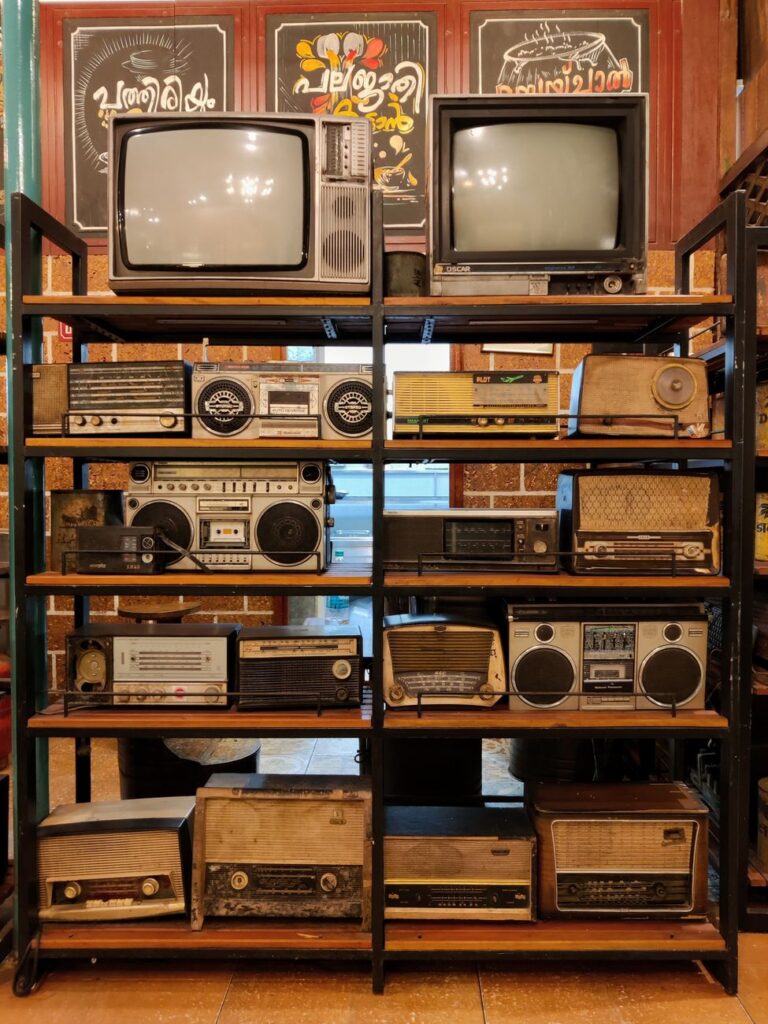
For example, with old cassette players, the tape mechanism may be broken but the radio still works.
That’s useful information.
Now I can honestly tell buyers:
Tape player doesn’t work, radio works properly.
That’s much better than simply saying:
Untested.
Often the radio alone makes the item more valuable.
Small pieces of information can make a big difference.
Space Is A Business Expense Too
Many new sellers underestimate how important storage becomes.
Fifty items may not seem like much.
But what happens when you have:
- 500 items
- 1,000 items
- 2,000 items
The decisions you make early start multiplying.
Space has value.
Storage has value.
Organization has value.
An item doesn’t have to be small.
But if it’s large, it needs to justify the space it occupies.
Experience Changes Everything
When I first started sourcing, I asked:
Can I make money on this?
Now I ask:
Is this worth my time, space, effort, and attention?
That’s a much different question.
And experience is what teaches you the difference.
Final Thoughts
One of the biggest surprises in reselling is learning that profitable items are not always worth buying.
Profit matters.
But so do:
- sell-through rate
- testing
- storage
- shipping
- time
- effort
These days I leave most items behind.
Not because they can’t make money.
Because I’m looking for the items that make the most sense overall.