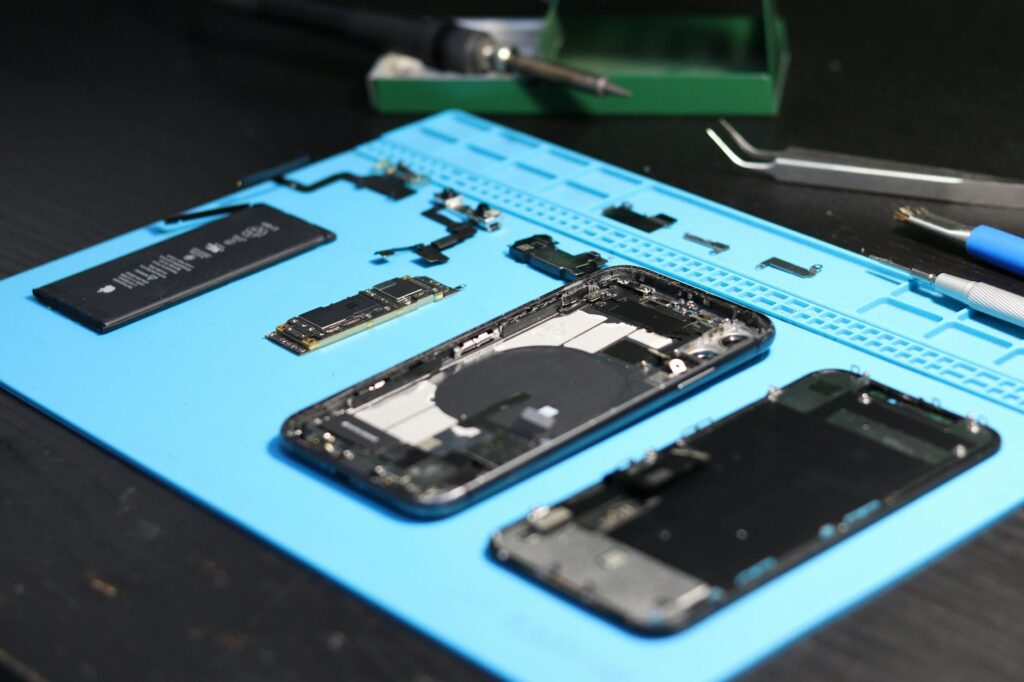
When I first started reselling, I thought I could repair a lot more electronics than I actually could.
Not because I was overconfident, but because repairs often look much easier online than they are in reality.
You watch a five-minute YouTube video and it seems simple:
- replace a battery
- swap a part
- put everything back together
- make more money
And sometimes it really is that easy.
But many times it isn’t.
Over the years I’ve learned that while repairs can absolutely be worth doing, I usually don’t repair electronics before selling them. Instead, I focus on testing the item, accurately describing the issue, and deciding whether it makes more sense to sell it as-is.
Time Matters Just As Much As Profit
One of the biggest lessons I’ve learned from reselling is that profit is not the only thing that matters.
Time matters too.
In fact, time may be the most valuable resource we have.
A repair might increase the value of an item by:
- $10
- $20
- $50
- or sometimes even more
But if that repair requires hours of research, troubleshooting, ordering parts, watching videos, and hoping everything goes back together correctly, the extra profit may not be worth it.
Sometimes I can spend that same time:
- listing more items
- testing inventory
- shipping sold orders
- sourcing new inventory
The money needs to be worth the time.
When I decide not to repair something, that doesn’t mean I throw it away. I explain how I list and price those items in How I List Broken Electronics on eBay (For Parts or Repair).
That’s something I understand much better now than when I first started.
Some Repairs Are Easy. Others Become Art Projects.
One thing I’ve learned is that electronics repairs vary wildly.
Sometimes a device simply needs a new battery.
You open the case, unplug the old battery, plug in the new one, close it up, and you’re done.
Those repairs can be worthwhile.
Other times you open a device and quickly discover that replacing the battery requires:
- removing multiple layers of components
- unscrewing half the device
- dealing with glue
- dealing with fragile connectors
- soldering
At that point, what looked like a quick repair starts becoming an art project.
Some people enjoy that.
I don’t always.
For me, soldering is usually where I start asking whether the repair is really worth my time.
That’s not because soldering is bad. It’s simply another skill that takes time to learn, practice, and do correctly.
Learning One Repair Can Change The Math
There are situations where repairs make perfect sense.
For example, if you have ten identical devices with the exact same problem, learning that repair one time can completely change the equation.
Maybe replacing one battery takes an hour the first time.
But once you’ve learned the process, you can suddenly repair:
- the second one
- the third one
- the fourth one
much faster.
In those situations the time investment may be worth it.
Even if you make mistakes along the way, you’re still learning.
I don’t view that as wasted time.
I view it as education.
The important thing is learning from the experience.
Many Repairs Don’t Go As Planned
This is another lesson that only comes from experience.
I’ve worked with old electronics where I thought:
“This should be an easy fix.”
Then I opened the device and discovered the repair was far more complicated than expected.
A good example is old cassette players and tape decks.
Many simply need a new belt.
That sounds easy enough.
But sometimes the belt is buried underneath circuit boards and components that require significant disassembly just to access.
What looked like a ten-minute project suddenly turns into something much bigger.
At that point I often ask myself:
“Would I rather spend another hour repairing this, or spend that hour listing other inventory?”
Many times the answer is obvious.
Buyers Want Broken Electronics Too
This surprised me when I first started.
There is a huge market for broken electronics.
If you’re not sure whether a broken device is worth listing, check out my article How I Decide If Something Is Worth Selling on eBay.
People buy:
- broken phones
- dead iPods
- cameras with lens errors
- tape players that don’t work
- electronics that won’t power on
- devices with battery problems
all the time.
Some buyers need parts.
Some buyers enjoy repairs.
Some buyers have knowledge that I don’t.
Some buyers simply enjoy the challenge.
I’ve even had buyers message me afterward saying they successfully repaired an item and had fun doing it.
That’s great.
Everyone wins.
Sometimes The Repair Is The Product
One thing I’ve realized over time is that I don’t always need to be the person who completes the repair.
There are companies and individuals whose entire business is refurbishing electronics.
Many of them are repeat customers.
I may buy something, test it, identify the problem, clean it up, take good photos, and accurately describe what’s wrong.
Then someone else buys it, repairs it, and sells it again.
That’s perfectly fine.
I don’t need to capture every dollar of value from every item.
Sometimes simply identifying the problem and finding the right buyer is valuable by itself.
Honesty Is The Best Strategy
This is probably the most important lesson.
If you know what’s wrong with something, say so.
Proper testing helps a lot here. I wrote more about that in How to Test Electronics for eBay.
If there’s a crack, show it.
If there’s a battery issue, mention it.
If it won’t power on, say that.
What I try not to do is hide problems or create unrealistic expectations.
I also don’t like calling something “untested” if I actually tested it.
Buyers deserve accurate information.
I’ve purchased plenty of items described as untested that were clearly tested.
You learn to recognize the difference.
Being honest creates trust.
And trust brings people back.
I’ve always preferred slightly lowering expectations rather than overhyping an item.
That way buyers often end up pleasantly surprised instead of disappointed.
Experience Changed My Perspective
When I first started reselling, I didn’t think every broken item needed to be repaired.
I simply thought repairs would be easier and faster than they actually were.
Sometimes I was right.
Sometimes I was very wrong.
What’s funny is that the opposite can happen too.
Occasionally I’ll look at something and think:
“There’s no way I can fix that.”
Then I open it up and discover it’s surprisingly simple.
The longer you do this, the better you become at judging which projects are worth your time and which aren’t.
That judgment comes from experience.
The Goal Is To Build A Repeatable Business
One thing I’ve learned is that reselling is not just about fixing items.
It’s about building systems.
It’s about understanding:
- trends
- demand
- timing
- profit
- effort
Markets change.
Items that sold for $100 a few years ago might only sell for $50 today.
Sometimes more sellers enter a niche.
Sometimes demand fades.
Sometimes new trends appear.
The goal isn’t to perfectly predict everything.
The goal is to stay flexible, keep learning, and adapt.
That’s why I focus more on repeatable systems than individual repairs.
Final Thoughts
I usually don’t repair electronics before selling them because I’ve learned that time matters just as much as profit.
Some repairs are absolutely worth doing.
Others are not.
The longer I’ve been reselling, the more I value:
- honesty
- consistency
- simplicity
- learning
- and repeatable systems
Sometimes fixing the item is the right move.
Sometimes selling it exactly as it is makes far more sense.
The trick is learning the difference.