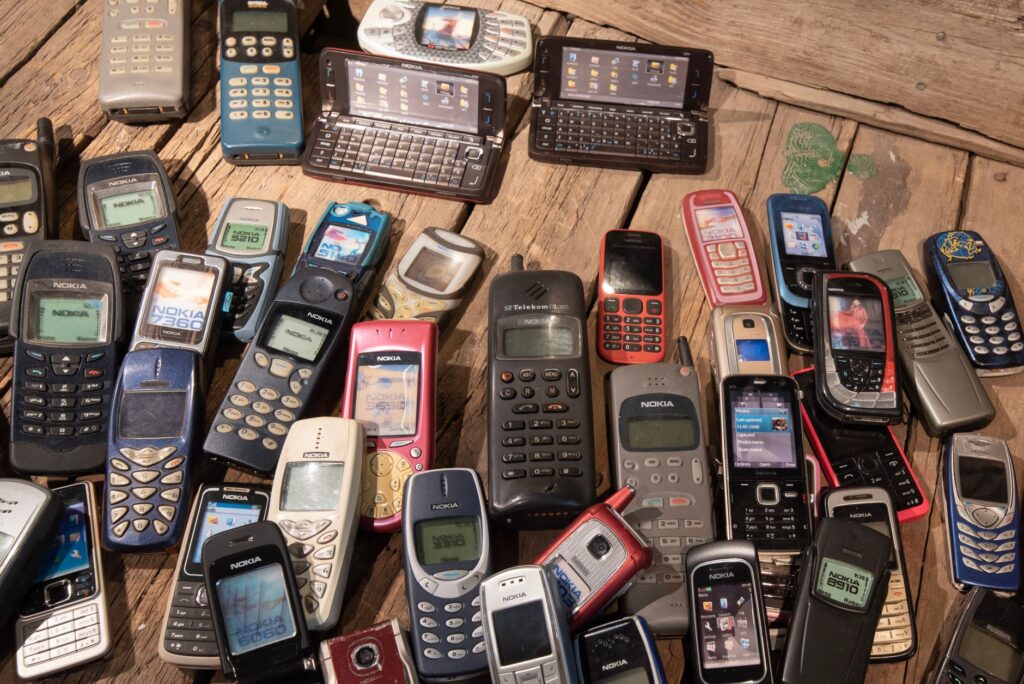
Cell phones are one of my favorite types of electronics to sell on eBay.
And honestly, I probably sell more older phones than newer ones.
Newer smartphones are obviously valuable, but they can be harder to come across cheaply. People have trade-in programs, carrier upgrades, and other easy ways to get some value out of a phone that is only a few years old.
Older phones are different.
They end up in drawers, storage units, garage sales, thrift stores, estate lots, and random boxes of electronics.
That means I run into a lot of flip phones, sliders, older Nokia phones, BlackBerry-style phones, Sidekicks, Motorola Razrs, and other designs that you just don’t see much anymore.
And people still buy them.
Sometimes they want to use them.
Sometimes they want parts.
Sometimes they collect them.
Sometimes they just want the exact phone they remember having 15 or 20 years ago.
That combination of small size, nostalgia, parts value, and surprisingly strong demand makes phones an interesting category for me.
Older Phones Can Have Value Even When Nobody Will Use Them as a Daily Phone
One of the things I like about older phones is that usefulness isn’t the only reason somebody might buy one.
The designs used to be much more interesting.
Phones flipped open.
They slid sideways.
They had full physical keyboards.
Some screens swiveled.
Some were tiny.
Some were weird.
Today, most smartphones follow roughly the same basic shape.
That creates a nostalgia factor with older phones.
I’ve sold broken flip phones to somebody who didn’t even care whether they worked. They wanted several decent-looking phones for a throwback-themed party or display.
That’s a perfect example of why I don’t automatically look at an obsolete phone and think it has no value.
People buy these things for all kinds of reasons.
An old phone can be a collectible, a display piece, a prop, a source of parts, or simply the exact model somebody remembers from when they were younger.
I Still Sell Newer Smartphones Too
When I get a newer iPhone, Samsung Galaxy, Google Pixel, or another 4G or 5G phone, the testing becomes more important because someone may actually want to activate and use it every day.
With a newer phone, I care about things like the screen, touchscreen, charging, cameras, speakers, microphone, buttons, storage capacity, battery condition, account locks, carrier status, and whether I can properly factory reset it.
The potential value is also higher.
If a phone could sell for $50, $100, or considerably more, spending five minutes checking the important functions is worth it to me.
The First Thing I Want to Know Is Whether It Powers On
I start simple.
Does it turn on?
If the battery is dead, I charge it.
If it has a removable battery but the battery is missing, there’s a decent chance I have another compatible battery somewhere.
One thing that happens after selling electronics for years is that you accumulate a ridiculous collection of chargers, cables, adapters, and batteries.
Eventually that random battery you saved three years ago helps you test another phone.
If the phone doesn’t power on at all, that doesn’t automatically mean I throw it away.
I look at what the phone is.
Some collectible phones can still sell for good money with a completely broken screen or no power at all.
If it has enough individual value, I’ll sell it separately for parts or repair.
If it’s a cheap phone that isn’t worth the time to create an individual listing, I’ll usually save it for a phone lot.
I explain that general broken-item process in How I List Broken Electronics on eBay (For Parts or Repair).
If It Powers On, I Test the Important Functions
A phone turning on is a good start.
It isn’t the same thing as a fully working phone.
For a newer smartphone, I usually move through the main functions fairly quickly.
I’ll swipe around the touchscreen, press the volume and power buttons, open the cameras, plug in the charger, listen to the speaker, check the screen, look at the storage information, and make sure everything appears normal.
I can test several things at the same time.
If I open the camera and record a quick video, for example, I can check the camera, microphone, screen, and playback without turning it into some hour-long inspection.
That’s the balance I’m looking for.
I want to test enough to confidently describe the phone without spending more time testing it than the item is worth.
I use the same basic philosophy in How to Test Electronics for eBay (Simple Beginner Guide).
Locks Are One of the Biggest Things I Check
A phone can look beautiful and work perfectly but still have a major problem if the next owner can’t properly activate it.
With iPhones, Activation Lock is a big one.
Sometimes people erase an iPhone and assume that’s the end of it. They don’t realize the phone may still be associated with their Apple account through Find My.
Most of the locked phones I get are probably nothing nefarious. Here’s Apple’s instructions for checking whether an iPhone is unlocked.
Someone traded it in, sold it, donated it, or got rid of it and simply didn’t understand everything they needed to remove first.
But the reason doesn’t change what I can sell.
If I cannot legitimately remove the Activation Lock and prepare the phone for a new owner, I’m not treating it like a normal usable iPhone.
It becomes a parts-type item.
Android phones can have a similar problem through Factory Reset Protection, usually called FRP.
Again, if I cannot properly prepare the device for another owner, I disclose that and price it accordingly.
There can still be value in the screen, cameras, housing, board, buttons, and other components.
I Factory Reset Phones Whenever I Can
If the phone is usable and there isn’t an account-lock problem, I want to properly erase it before it goes to the buyer.
I don’t want someone receiving another person’s photos, contacts, messages, email, accounts, or other private information.
A normal working phone should be ready for the next owner to set up.
If I cannot reset it because of a passcode, account lock, or another issue, I say that.
I don’t call a phone untested after I’ve already discovered a specific problem.
That distinction is something I cover in What Does “Untested” Mean on eBay? Does It Mean Broken?
Carrier Status and Compatibility Can Get Complicated
This is one area where I try hard not to overpromise.
I have SIM cards and service that let me test phones on more than one network.
Sometimes I’ll put my normal SIM into a phone and then test another network using a cheap prepaid service such as Tello.
That gives me more information.
If a phone works with both services, that increases my confidence about its carrier status.
But I describe exactly what I actually tested.
I might say that I tested the phone successfully using Verizon and T-Mobile service, for example, rather than making a blanket promise that it will work with every carrier and every plan.
On newer iPhones, I also check the Carrier Lock information in the phone’s settings.
If I can clearly verify the phone is unlocked, great.
If there is still uncertainty, I tell the buyer to confirm compatibility with their carrier before purchasing.
Carrier compatibility can depend on more than whether the phone physically turns on.
I’d rather be a little conservative than confidently tell somebody a phone will work on a network I never tested.
I Check the IMEI, But I Don’t Publish It
For newer phones, I check identifying information such as the model and IMEI when it helps me research the device and its status.
But I personally do not post a full IMEI in my listing photos.
I also generally don’t give the full number to random people messaging before a sale.
That is simply my own risk-management policy.
Some buyers legitimately want an IMEI so they can research compatibility or device status, but I’m not comfortable broadcasting a unique device identifier publicly.
Once the phone has sold and shipped, I’m much more comfortable giving the buyer information about the exact device they now own if they need it.
My goal is to give enough information in the listing that a normal buyer understands what they’re buying without publishing every identifier on the phone.
Older Flip Phones Are a Different Kind of Sale
When I’m selling an old flip phone or slider, I’m not necessarily testing it as though somebody is going to activate it tomorrow and use it as their primary phone.
A lot of older phones rely on network technology that isn’t broadly useful in the United States anymore.
So I focus on the device itself.
Does it turn on?
Does the screen work?
Can I navigate the menu?
Do the physical buttons respond?
Does the keyboard work?
Does the hinge, slider, or swivel mechanism feel normal?
Can I open the camera?
Can it take a photo?
Are there old games or other built-in features that still work?
Those things matter to collectors.
Even a terrible old 1- or 2-megapixel camera can be part of the appeal.
The low-quality camera is part of the nostalgia.
Somebody who remembers carrying that exact model when they were younger may enjoy powering it on, opening the menu, playing with the camera, or seeing an old game like Snake again.
That is a completely different reason for buying than somebody purchasing a modern smartphone.
Cosmetic Condition Matters With Collectible Phones
For older phones, appearance can make a big difference.
I check the housing carefully.
Old rubberized coatings can become sticky or start breaking down.
Battery doors disappear.
Small rubber covers over charging ports or memory-card slots can tear off.
Hinges can loosen.
Keypads can wear.
Screens can scratch.
If any of that is happening, I disclose it.
On the other hand, sometimes I find an old phone that is surprisingly clean.
A really clean collectible phone can stand out because there may not be many left in that condition.
Older Batteries Get Conservative Descriptions
Many older phones have removable batteries, which is nice because a buyer may be able to replace the battery fairly easily.
But I still treat old batteries like old batteries.
If it holds a charge, I say it holds a charge.
If I only used it briefly, I don’t promise how many hours it will last.
If the battery is weak, I say it’s weak.
If the exact strength is unknown, I say that.
I would rather underpromise on an old battery than tell somebody it’s “good” based on ten minutes of testing.
I use that same approach across electronics, which I explain in Should You Replace the Battery Before Selling Electronics on eBay? My Experience.
I Photograph Pretty Much Everything
Phones are easy to photograph, so I don’t see much reason to hide anything.
I want clear photos of the front, back, sides, screen, cameras, charging port, keypad or keyboard, model information, accessories, and any defects.
If it powers on, I show it powered on.
If it has a camera, I may show the camera interface working.
If the screen is damaged, I show the damage.
If there is sticky or degrading rubber, I mention it.
If a battery door or port cover is missing, I show that.
Good lighting is especially important because small scratches and defects can disappear in a dark photo.
The buyer should have a pretty good idea of what the phone looks like before opening the description.
I Describe Exactly What I Tested
My descriptions don’t need to be complicated.
I just want them to say what I actually know.
For a modern phone, that might be something like:
Phone powers on and has been factory reset. Touchscreen, buttons, cameras, Wi-Fi, charging, speakers, and microphone tested and working. Battery is used. Exact long-term battery strength is unknown. Tested with Verizon and T-Mobile service. Please confirm compatibility with your carrier before purchase.
For an older collectible phone, it might be:
Phone powers on. Screen, keypad, menu, and camera tested and working. No current cellular service was tested. Battery is used and exact strength is unknown.
For a locked phone:
Phone powers on but is Activation Locked and cannot be set up normally. Sold for parts or repair. Please review all photos and description.
That tells the buyer much more than simply writing:
Works.
I explain my broader definition of testing in What Does “Tested” Mean on eBay? What Buyers and Sellers Should Know.
I Don’t Call Known Problems “Untested”
If I know the touchscreen is bad, I say the touchscreen is bad.
If the camera doesn’t work, I say that.
If the phone is locked, I say it’s locked.
If the battery is dead, I say the battery is dead.
Untested should mean I genuinely did not test it.
Once I find a problem, I know something about the phone.
That information belongs in the listing.
Locked and Broken Phones Can Still Sell
There’s a market for phones that most normal buyers would consider useless.
Repair shops buy them.
Refurbishers buy them.
Parts harvesters buy them.
Hobbyists buy them.
Sometimes an individual just needs one very specific part.
I’ll occasionally get a message from somebody saying they only want the camera or some other component from a phone I have listed.
If my phone is a working $50 phone and they want to pay almost nothing because they only need one part, that doesn’t make sense for me.
They would be better off finding a more damaged parts phone.
But those messages remind me that even a broken phone can contain components somebody needs.
Some Broken Phones Are Worth Selling Individually
The decision depends on value.
If a broken phone can still sell for $40, $50, $100, or more, I’m probably going to give it its own listing.
Special or collectible models can be particularly interesting.
I’ve sold rare or special-edition phones with major problems because someone still wanted the device as a project or for parts.
The fact that the screen doesn’t work does not necessarily mean the phone is worthless.
But if a random broken phone is only going to sell for a few dollars, that changes things.
Cheap Phones Often Become Lots
I don’t want to create 20 individual listings for phones worth $5 each.
My threshold isn’t an absolute rule.
I will sell something for $10 or $20 if I think it will move easily enough.
But there’s a point where the time becomes more valuable than the individual listing.
That’s when I start building phone lots.
I might have a group containing phones that are locked, dead, missing batteries, partially tested, or simply low value.
I describe what I know and sell the entire group for parts or repair.
I go deeper into that decision in Should You Sell Items Individually or as a Lot on eBay? (How I Decide).
I Research the Exact Model Before Pricing
With old phones, tiny differences can create huge differences in value.
So I don’t just search:
old Motorola flip phone
I want the model.
Then I look at sold listings.
I compare working examples with parts examples.
I look at condition.
I look at whether the battery or charger was included.
I look for special editions.
I check whether people are actually buying the model or whether sellers are simply asking ridiculous prices.
Sometimes an old phone that looks like junk is collectible.
Sometimes another phone that looks almost identical is worth very little.
Research is what tells me the difference.
Accessories Can Matter Too
I don’t automatically throw old phone accessories into a random box.
Original chargers, battery doors, cases, headsets, docks, manuals, boxes, and other accessories can make a collectible phone more desirable.
Sometimes an accessory can even be surprisingly valuable by itself because everyone lost theirs 15 years ago.
If I know something belongs with the phone, I check its value before separating it.
I Don’t Try to Talk a Buyer Into the Wrong Phone
Sometimes buyers send me very specific questions.
There’s nothing wrong with asking questions.
But occasionally someone’s questions make it obvious that they need something more specific than what I’m selling.
In that situation, I’ll tell them.
I’m not going to try to convince somebody that my phone is perfect for them just because I want the sale.
In my experience, the easiest transactions are usually the ones where the listing already answers everything the buyer needs to know.
They buy it.
I ship it.
They receive exactly what they expected.
Maybe they leave good feedback.
Everybody moves on.
That’s a perfect transaction to me.
If someone has extremely narrow expectations and my phone doesn’t clearly meet them, I would rather lose the sale than create a return.
Returns Are Part of Selling Phones
Even after careful testing, phones can still be returned.
Sometimes the buyer misunderstands carrier compatibility.
Sometimes they expected more from an old battery.
Sometimes they use the wrong charger or don’t understand an older device.
Sometimes the phone genuinely develops a problem.
And sometimes I can make a mistake too.
The goal is not to make returns impossible.
The goal is to make the listing accurate enough that the buyer knows what they’re getting.
I explain how I handle those situations in How I Handle eBay Returns as a Seller (My Actual Process).
Why I Like Selling Phones
Phones fit almost everything I like about used electronics.
They’re small.
They’re easy to store.
They’re easy to ship.
They’re easy to photograph.
They can have good value.
Broken ones can still have value.
And there is an enormous variety of them.
I might list a relatively modern smartphone one day and a strange old flip phone the next.
The older devices are especially fun because so many of them have personality.
People remember them.
That nostalgia creates a market that doesn’t necessarily disappear just because the cellular technology becomes outdated.
Final Thoughts
Selling used cell phones on eBay comes down to understanding exactly what I have and being honest about what I tested.
With newer phones, I pay close attention to carrier status, account locks, factory resets, battery health, and the functions someone would expect from a daily-use smartphone.
With older phones, I focus more on whether the device powers on, the screen and buttons work, the camera and menus function, the housing is complete, and the phone has collectible or parts value.
If something is broken, I say it’s broken.
If it’s locked, I say it’s locked.
If I didn’t test something, I don’t pretend I did.
And if the phone isn’t valuable enough to justify its own listing, I put it with other phones and sell the lot.
Some phones are daily-use devices.
Some are projects.
Some are parts.
Some are collectibles.
And sometimes the weird old flip phone that somebody forgot in a drawer 15 years ago ends up being the most interesting phone in the entire box.
New to Reselling on eBay?
If you want to learn more about how I handle electronics, I’d start with: