“Tested” sounds like a simple word.
But on eBay, it can mean different things depending on the seller.
One seller might say something is tested because it powers on.
Another seller might have checked the buttons, screen, charging, battery, playback, camera, speakers, ports, and everything else they reasonably could.
I sell a lot of used electronics, and for my listings, I keep the meaning pretty simple:
If I say an item is tested, I mean it works.
If it doesn’t fully work, I don’t want the word “tested” by itself giving the buyer the impression that everything is okay.
Here’s how I look at tested, untested, partially tested, and the actual eBay condition selected on the listing.
What “Tested” Means in My Listings
When I write tested, I mean I tested the item and I’m comfortable saying that it works.
That doesn’t necessarily mean I spent hours testing every obscure feature buried in a manual.
It means I checked the normal functions someone would reasonably expect from that item.
If it’s an iPod, I’m not just seeing whether an Apple logo appears.
I’m navigating it.
I’m checking the buttons.
I’m playing something.
I’m paying attention to the battery.
I’m checking charging and the basic functions that matter.
If I discover a problem that prevents the item from functioning normally, I don’t consider that simply “tested and working.”
Turning On Isn’t the Same as Working
This distinction matters a lot with electronics.
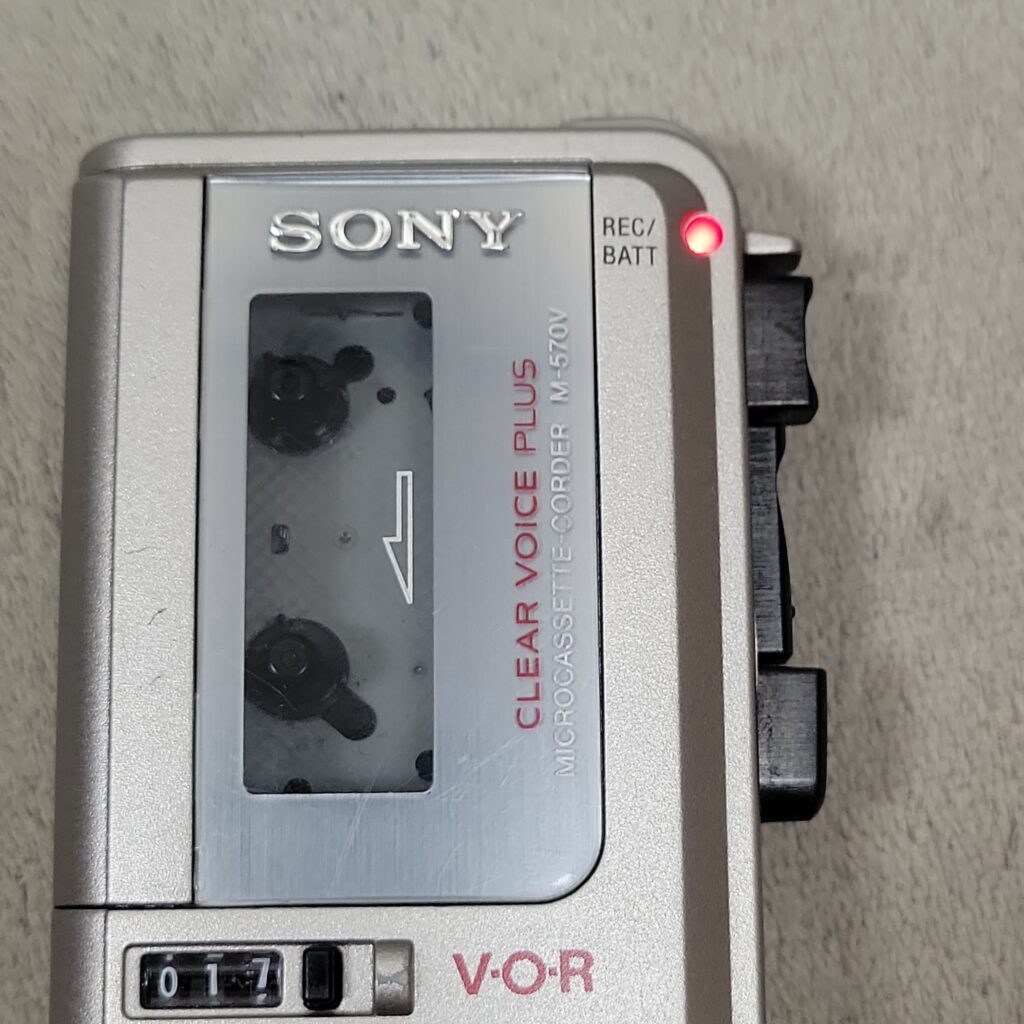
I’ve sold microcassette recorders that will turn on and illuminate their power light, but when I put a tape inside and press Play, nothing happens.
That’s not a working recorder.
In that situation I might write something like:
Turns on — read description
Then I’ll explain exactly what happens.
I wouldn’t put “tested” in the title and leave it at that because I think most buyers would reasonably interpret that as a good sign about the item’s functionality.
Sometimes I use READ in the title when there’s an important condition issue because title space is limited.
eBay currently gives sellers up to 80 characters for the main listing title, including spaces, so every word takes up valuable real estate. eBay
That’s also why I may write “turns on” instead of “powers on.”
Same idea. Fewer characters.
I Still Explain Exactly What I Tested
Even when something works, I don’t like relying exclusively on the word “tested.”
I’ll elaborate in the description.
If I’m selling a camera, for example, I might check the lens movement, LCD, buttons, basic photo functions, flash, battery operation, and whatever else I can reasonably verify.
I’ll also take photos that demonstrate some of it.
If the camera powers on and the lens extends normally, I’ll show that.
If the LCD is working, I’ll show it turned on.
A buyer shouldn’t have to blindly trust a single word when I can show and describe what I actually tested.
I go through more of my actual electronics-testing process in How to Test Electronics for eBay (Simple Beginner Guide).
The Description Still Matters Even If Buyers Don’t Read It
Realistically, I don’t think every buyer reads every word of a description.
Some probably barely read it at all.
But as a seller, I still want the important information there.
If there’s a flaw, I mention it.
If there’s something I couldn’t test, I mention it.
If one function works and another doesn’t, I mention that.
The listing should accurately represent what the buyer is getting even if some buyers choose not to read everything.
And if there’s ever a problem later, I want the listing to clearly show what I disclosed before the sale.
“Used” Has an Important Meaning for Electronics
This is something sellers should pay attention to.
For many electronics categories, eBay’s current definition of Used says that the item may show cosmetic wear but is fully operational and functions as intended.
Meanwhile, For parts or not working applies to an item that doesn’t function as intended or isn’t fully operational.
That’s one reason I’m conservative about condition.
If an electronic has a significant functional problem, I will often put it under For parts or not working and then explain exactly what does and doesn’t work.
I don’t like putting a partially broken electronic under Used and hoping the description somehow cancels that out.
One nuance: eBay’s available condition choices and definitions vary by category, so sellers should always check the condition choices for the particular category they’re using. eBay
What Does “Untested” Mean?
Untested should mean exactly what it says:
The seller did not test it.
Maybe they don’t have the right cable.
Maybe they don’t have a compatible battery.
Maybe testing requires another piece of equipment.
Maybe they simply don’t want to spend the time testing it.
I own an absurd number of cables and adapters at this point, and I still occasionally get something that uses a connection I don’t have.
If I genuinely can’t test it, I’ll say it’s untested.
Depending on the item, I’ll often list it under For parts or not working because I’m not comfortable guaranteeing functionality I haven’t verified.
Someone else can take the gamble.
Untested Does Not Automatically Mean Broken
This is where untested items get interesting.
I’ve bought plenty of them.
Sometimes they’re dead.
Sometimes there’s a problem.
Sometimes they work perfectly.
If I buy an untested lot, I generally price my purchase around the assumption that things could be broken.
That way, anything that works is upside rather than something I needed to happen for the purchase to make sense.
That’s also why I like buying certain untested electronics to resell.
The other side of this is what sellers mean when they say they haven’t tested an item at all. I explain how I interpret that in What Does “Untested” Mean on eBay? Does It Mean Broken?
I wrote more specifically about that side of sourcing in Buy Untested Electronics to Resell.
I Look at What Else the Seller Sells
Here’s something I personally do when I’m considering an untested item.
I look at the seller’s other listings.
Imagine someone is selling an old phone and says:
Untested because I don’t have the cable.
Then I look through their store and see several other phones using that exact same cable, all conveniently tested and working.
That makes me more skeptical.
It doesn’t prove the seller is lying.
But I’m going to factor it into my decision.
On the other hand, if I find a seller whose store is almost entirely clothing, coins, paper collectibles, or some completely unrelated category and suddenly they have a random box of old phones marked untested, I’m more interested.
Electronics clearly aren’t their specialty.
They may genuinely not have the equipment or interest to test them.
They also may not know exactly what they’re worth.
Those are the kinds of listings I like investigating.
“Untested” Shouldn’t Hide Something You Already Know
If I test an item and discover a problem, it’s not really untested anymore.
I know something.
If a CD player turns on but won’t spin a disc, I’ll say that.
If the radio portion works but the CD mechanism doesn’t, I’ll say that too.
That extra information can actually add value.
Maybe somebody only wants the radio.
Maybe they need the unit for parts.
Maybe they’re repairing another one.
Maybe they want it as a prop or display piece.
A broken item isn’t necessarily worthless.
But I don’t think “untested” should be used as a nicer-sounding substitute for “I tested this and discovered that it’s broken.”
Partially Tested Is Different Too
Partially tested is pretty straightforward:
Some of the item was tested, but not everything.
If a seller uses that phrase, I immediately want to know:
What was tested?
That’s where the description becomes important.
For my own listings, I often skip the vague phrase and simply state what happened.
Maybe it turns on.
Maybe the radio works.
Maybe the display works.
Maybe I couldn’t test another feature.
Just tell the buyer.
Sometimes Sellers Use “For Parts” Even When an Item Might Work
I’ve bought items where the seller said something like:
This was working when I last used it, but it’s been sitting in a drawer for years and I haven’t tested it recently, so I’m selling it for parts or repair.
I actually respect that.
The seller isn’t promising current functionality.
They’re giving me the history they know and then choosing the conservative condition.
As a buyer, I can decide whether the price makes the risk worthwhile.
And there can still be plenty of value in a broken or locked electronic.
Repair businesses, parts buyers, refurbishers, and resellers buy that stuff every day.
Buyers Should Look Beyond the Word “Tested”
When I’m buying, I don’t assume every seller uses “tested” exactly the way I do.
I scroll down.
I read what they wrote.
I look at the condition.
I look at the photos.
If it says tested and the seller selected Used in an electronics category, I’m expecting a functional item unless the listing clearly explains otherwise.
If they selected For parts or not working, I’m treating it as a risk regardless of what other words appear in the title.
The condition, description, title, and photos should all make sense together.
eBay’s own policy says the selected item condition should match the item and be consistent across the listing’s title, description, and item specifics. eBay
Photos Can Back Up What You’re Saying
When something works, I like showing that where I can.
For a camera, I’ll photograph it turned on.
I’ll show the extended lens.
I’ll show the LCD displaying an image.
You can’t demonstrate everything in a still photograph. Flash is a good example.
But you can still write flash tested and working in the description.
The combination of photos and a specific description gives the buyer much more information than simply writing “TESTED” in the title.
Testing Helps With Returns — But It Can’t Prevent All of Them
Testing thoroughly absolutely helps reduce returns.
So does describing everything clearly.
But there is no way to prevent every return.
I’ve had buyers return vintage electronics saying they don’t work, only for me to receive the item back, test it again, and find that it works exactly as it did before.
Sometimes the buyer was using the wrong charger or simply didn’t know how to operate an older device.
If the buyer reports an item as defective and it comes back working, I’ll test it again and handle the return based on what I actually receive.
I go into that whole process in How I Handle eBay Returns as a Seller (My Actual Process).
You can’t eliminate those situations entirely.
You can only make your listing as accurate as possible.
I’d Rather Underpromise and Overdeliver
This is probably the biggest theme across my listings.
I’d rather be conservative.
If I’m unsure, I say I’m unsure.
If I couldn’t test something, I say I couldn’t test it.
If something has a problem, I say what the problem is.
I’d rather have somebody open the package and think:
This is nicer than I expected.
I don’t want them thinking:
The seller made this sound better than it actually is.
So What Does “Tested” Mean on eBay?
For my listings, tested means the item works.
For somebody else’s listing, I still verify what they mean.
I read the description.
I look at the photos.
I check whether the item is listed as Used or For parts or not working.
If there’s no additional explanation and a used electronic is represented as tested and listed in a condition that says it’s fully operational, I think it’s reasonable for a buyer to expect a working item.
But the word tested by itself isn’t a substitute for a good description.
For sellers, the simplest rule is:
Say what you actually know.
If it works, say it works.
If you only tested part of it, say what you tested.
If you didn’t test it, say untested.
If you know it’s broken, explain what’s wrong.
That makes buying easier, selling easier, and gives everybody fewer surprises.
Final Thoughts
I don’t think this needs to be complicated.
When I say tested, I mean working.
When I say untested, I mean I didn’t test it.
When I know there’s a problem, I describe the problem instead of hiding behind “untested.”
If I already know an item has a fault, I stop treating it as untested and list it based on the actual problem. I explain that process in How I List Broken Electronics on eBay (For Parts or Repair).
And when I’m buying from somebody else, I don’t assume their terminology is identical to mine.
I read the listing.
That’s probably the biggest takeaway.
One word can help summarize an item’s condition, but the details tell you what you’re actually buying.
New to Reselling on eBay? Start Here
If you’re newer to selling electronics on eBay, these guides cover more of the process I use:
How to Test Electronics for eBay (Simple Beginner Guide)
Should You Test Every Item Before Selling on eBay?
Buy Untested Electronics to Resell
How I Handle eBay Returns as a Seller (My Actual Process)